Welcome to the next evolution of AI-powered assistance – Gemini 3 is finally out for users! Whether you’re a developer eager to integrate cutting‑edge language models, a marketer looking to supercharge content creation, or simply a tech enthusiast curious about the latest breakthroughs, this guide will walk you through everything you need to know to hit the ground running.
Problem/Need
Why the upgrade matters
Many users of earlier Gemini releases have reported three common pain points: limited context length, slower response times in high‑traffic scenarios, and a lack of seamless integration hooks for modern development pipelines. As AI workloads grow, these bottlenecks can stall productivity and increase costs.
Businesses and creators now demand a model that can handle longer documents, deliver near‑real‑time answers, and plug directly into existing tools without a steep learning curve. Gemini 3 was built with these exact needs in mind.
Solution/Steps
Getting Started with Gemini 3
1. Create or upgrade your account on the Gemini platform. Navigate to the dashboard, click “Upgrade to Gemini 3,” and confirm your subscription tier.
2. Obtain your API key. After upgrading, go to the “API Access” section, generate a new key, and store it securely – treat it like a password.
3. Install the SDK for your preferred language. For Python, run pip install gemini-sdk. For JavaScript, use npm install @gemini/sdk.
4. Initialize the client in your code:
Python example: import gemini
client = gemini.Client(api_key="YOUR_KEY")
JavaScript example: const { GeminiClient } = require("@gemini/sdk");
const client = new GeminiClient("YOUR_KEY");
5. Test a quick request to verify everything works. Send a short prompt like “Summarize the latest AI news” and ensure the response returns within seconds.
Advanced Configuration
6. Adjust context window – Gemini 3 supports up to 64K tokens. Set max_context=64000 in your request payload to leverage the full length.
7. Enable streaming for real‑time output. Add stream=True to the call and handle the incremental chunks in your UI.
8. Fine‑tune on domain data (optional). Upload a CSV of domain‑specific Q&A pairs, then trigger a fine‑tuning job via the dashboard or SDK.
Benefits
What you gain with Gemini 3
Longer context handling means you can feed entire reports, legal contracts, or codebases without chopping them into pieces.
Reduced latency thanks to optimized inference pipelines, delivering answers in under 500 ms for most queries.
Scalable pricing – a pay‑as‑you‑go model that discounts high‑volume usage, making it cost‑effective for both startups and enterprises.
Robust safety filters that adapt to new threats, helping you stay compliant with industry regulations.
Best Practices
Optimizing performance and reliability
1. Cache frequent prompts. Store common queries and their responses in a Redis layer to avoid redundant calls.
2. Batch requests when processing large document sets – send up to 10 prompts in a single API call to reduce overhead.
3. Monitor usage metrics through the Gemini dashboard. Set alerts for sudden spikes that could indicate misuse or unexpected traffic.
4. Implement graceful fallback. If the API times out, fallback to a lighter‑weight model or a cached answer to maintain user experience.
5. Secure your API key. Rotate keys quarterly and restrict use to specific IP ranges or service accounts.
Conclusion
With Gemini 3 now publicly available, the barrier between ambitious ideas and powerful AI execution has never been lower. By following the steps above, configuring the platform for your specific needs, and adhering to the best practices, you’ll unlock faster, more accurate, and scalable AI capabilities across any workflow. Dive in, experiment, and let Gemini 3 become the engine that drives your next breakthrough.
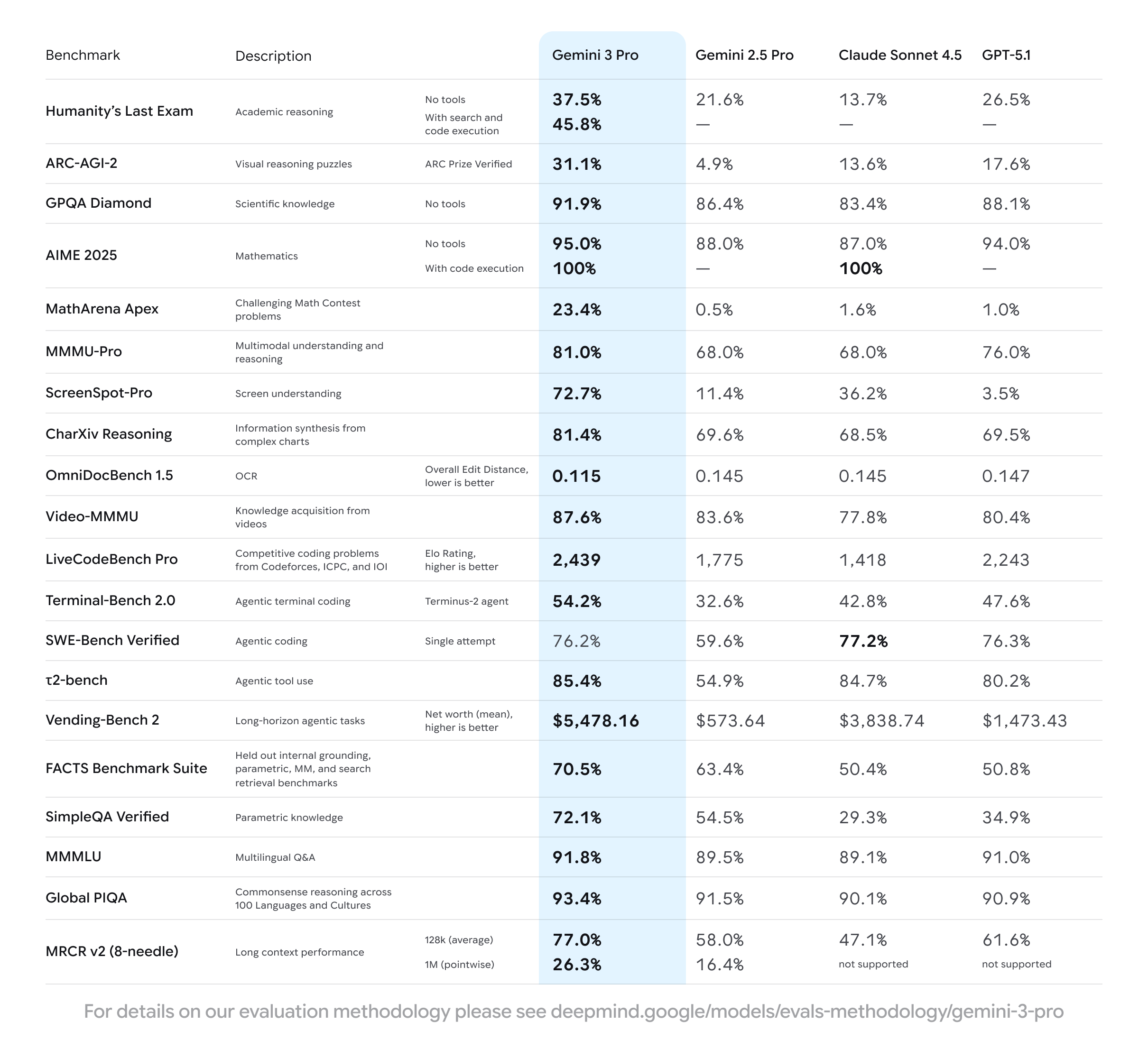
Source: Gemini 3 for developers: New reasoning, agentic capabilities